
On Saturday, April 25, 2026, the Utah GOP will hold their State Nominating Convention. Delegates will be presented with the following amendments for vote.
Constitutional Amendments forwarded by the State Central Committee (SCC) require a majority vote. Other Constitutional Amendments require a 2/3rds vote.
Constitutional Amendment to Improve Election Elimination Procedures
This amendment was forwarded by the SCC and only requires a majority vote.
The proposed change can be found here.
Sponsor: Stafford Palmieri Sievert (Utah Republican Party Secretary)
Summary of Change
ARTICLE XII CAUCUS AND CONVENTION PROCEDURES
Section 2. State and County Nominating Conventions
H. In the event that three (3) or more candidates are nominated for the same office, the convention may use multiple ballots or preference voting to choose Party nominees. The State Party Central Committee shall certify the method of election for the State Convention at least six (6) months prior to the convention. In the case of multiple ballots, more than one (1) candidate may be eliminated in each round., provided that If the number of votes received by any candidate is greater than the sum of the votes of all the candidates receiving fewer votes, all those candidates receiving fewer votes will be eliminated. sum of the votes received by the candidates to be eliminated does not exceed the number of votes received by the next highest candidate, and that at least two candidates remain on the ballot. In any round of voting where two (2) or more candidates tie in getting the least number of votes, and are not eliminated using the previous rule, all tied candidates will be eliminated, except where the combined votes of the tied candidates are greater than 40%, then no candidates shall be eliminated. The two (2) top candidates shall participate in the final ballot.
Argument For
This change is required to prevent situations where no candidates are eliminated in a particular round, and the vote ends in a stalemate. This can happen multiple times in the same election unless one or more delegates leave or change their votes. This also clarifies the case of multiple candidates tying for the lowest votes. This happened in a special election we had in the fall of 2023 and it made the voting go even longer when we couldn’t eliminate anyone in a round because of the language in this paragraph we are fixing here.
Argument Against
It would unfairly disadvantage candidates who might otherwise have a chance of winning. Consider the following situations:
| Candidate A | B | C | D |
|---|---|---|---|
| 10 | 15 | 20 | 55 |
The current proposal would eliminate A, B, and C simultaneously. If only the lowest vote getter were dropped, however, one of these candidates would have a mathematical chance to get onto the primary ballot instead of D winning the nomination outright.
| Candidate J | K | L | M |
|---|---|---|---|
| 15 | 15 | 30 | 40 |
Two get eliminated instead of one withdrawing or a coin toss eliminating one of the lowest vote getters. J could still beat or tie with K.
| Candidate R | S | T | U |
|---|---|---|---|
| 15 | 15 | 25 | 45 |
The tied candidates would be eliminated. This is not fair, because if only one were eliminated, the other could have surpassed candidate T.
Several members of the central committee recommend voting NO.
Personal Recommendation
I think there are valid issues with this change, and recommend voting NO.
Constitutional Amendment on the Eligibility to Run for Office
This amendment requires a 2/3 majority vote.
The proposed change can be found here.
Sponsor: Aaron Bullen (HD 53 Chair, UCRP Executive Committee)
Summary of Change
ARTICLE I NAME, PURPOSE AND MEMBERSHIP
C. Membership
1. Party membership is open to any resident of the State of Utah who registers to vote as a Republican and complies with the Utah Republican Party Constitution and bylaws, and membership may be further set forth in the Utah Republican Party Bylaws.D. 2. Eligibility to run for office. A person seeking to run as a state Republican candidate for partisan elected office must demonstrate continuous voter registration with Republican Party affiliation for the previous year. one year prior to filing to run for an elected office.
Argument For
This change would clarify that this requirement should apply to all partisan candidates in Utah, instead of only the candidates running through state convention.
Argument Against
This is a very surface level change. Seems to be a bit of a big nothing-burger. Several members of the state central committee are IMPARTIAL on this amendment.
Personal Recommendation
I personally don’t like things that appear to be loyalty tests. It forces state rules onto county parties. Counties should make this rule for themselves if they want it. It changes requirements for state positions to any Republican position, regardless of level of office. My recommendation it to vote NO.
Constitutional Amendment to Align Organizing and Nominating Convention Delegate Substitution Procedures
This amendment requires a 2/3 majority vote.
The proposed change can be found here.
Sponsor: Stafford Palmieri Sievert (Utah Republican Party Secretary)
Summary of Change
ARTICLE XII
CAUCUS AND CONVENTION PROCEDURES
Section 2. State and County Nominating Conventions
K. Counties shall submit a current, updated, and final list of state delegates to the State Party no later than 5:00 p.m., five days before the state nominating convention. This list shall include, at a minimum, name, precinct, Utah House district, Utah Senate district, Congressional district, address, phone number, email, and basis of eligibility for each delegate.
Section 7. State Organizing Convention
B. Counties shall submit a current, updated and final list of state delegates to the State Party no later than 12:00 a.m. 5:00 p.m. five eight days before the state organizing convention. This list shall include, at a minimum, name, precinct, Utah House district, Utah Senate district, Congressional district, address, phone number, email, and basis of eligibility for each delegate.
Argument For
There are two different timelines for submitted delegate substitutions to the state party. This causes confusion every single convention because no one can remember if it’s 8 days or 5 days. Since these two sections of the constitution are not next to each other, it’s easy to get confused. We chose 5 days instead of 8 days because some counties replace delegates at their county conventions, which can occur the weekend before state convention. A five day deadline gives them until 5pm on the following Monday.
This proposal also adds some clarification about what information the counties need to submit to the party. This information is already required at another place in the Constitution but this puts it in the relevant paragraph for easier reading.
Argument Against
This basically adds a requirement to provide delegate email addresses to the Party.
Providing email addresses has historically been at the County’s discretion. Now it’s being required that you have to give all this information up, whether you trust the party leadership or not. Some central committee members are concerned about whether the Party is going to give it just to candidates or delegates, or if they might sell the information to third parties. There are no restrictions in place. “What happens if we don’t trust party leadership?”
Personal Recommendation
I think it’s useful for the State Party to have contact information for everyone. Email is easier than phone or address. It’s not that much more than we are already required to give. I wish there were protections in place on how they would be allowed to use the data, but for this measure, I am IMPARTIAL.
Amendment to Protect Delegate Data
This amendment requires a 2/3 majority vote.
The proposed change can be found here.
Sponsor: Stafford Palmieri Sievert (Utah Republican Party Secretary)
Summary of Change
ARTICLE XII
CAUCUS AND CONVENTION PROCEDURES
Section 1. Precinct Caucuses
A.
1. Pursuant to the requirements of Utah State Election Law, the following listings names shall be made available to the public by the State Party and each County Party within the time frames specified:
a. All officers of that party, within 7 days of their election or replacement;
b. All persons holding membership on any governing bodies of that Party, within 14 days of their selection or replacement;
c. Any other persons holding elected or appointed positions**, including delegates,** within that party, within 14 days of their election or appointment;
d. All persons who have filed as Republicans for partisan public elective office, whose jurisdiction would include or be contained in that party’s boundaries, within 7 days of the filing deadline;
e. All persons who have been nominated as Republican candidates for public office by that Party, within 7 days of their nomination or replacement.
2. All such listings shall include, at a minimum, the name, address, and phone number, where available, of each person listed.
3. 2. The State Party shall maintain make available to the public, within 14 days of the caucuses, a complete statewide listing of all Republican state delegates. Each county party shall maintain make available to the public, within 14 days of the caucuses, a complete countywide listing of the Republican state and county delegates residing in that county. Changes in delegate status shall be reflected in the listings within 14 days of their occurrence.
4. 3. All delegate listings shall include, at a minimum, the name, precinct, Utah House district, Utah Senate district, Congressional district, address, phone number, email and basis of eligibility of each delegate (e.g., election in the precinct caucus, election after the caucuses to fill an unfilled seat, or appointment to fill a vacancy occurring after the caucuses).
5. 4. The State Party and/or county parties may charge up to, but not more than, the direct cost of the medium by which a listing or a method is made available to the person(s) so requesting~~,~~. provided that any listing made available by electronic mail or on the Internet shall be made available at no charge. Officially declared candidates currently pursuing office through the convention system will not be charged fees for access to a method to contact delegates relevant to their race by the State or any County Party.
5. Nothing in this Section precludes the requirement that State and County Party leadership maintain neutrality towards Republican candidates.
Argument For
Right now, this section of the Constitution has been interpreted to mean that the State Party and County Parties must provide the home addresses and phone numbers of state and county delegates to anyone who asks for them. Not only is it dangerous in our political climate for us to publish the home addresses of delegates, but it has given people unfriendly to the party - like the media, Democratic operatives and others - the idea that they can request delegate information from the party. I receive these requests regularly. Furthermore, members of our leadership team have been threatened, particularly during the Prop 4 repeal effort, for serving. These people typically point to this section of the Constitution as justification for why they should have access. Being a delegate takes time and energy. It shouldn’t also be dangerous for their families or themselves or come with being spammed by unwanted texts and emails from people who hate Republicans. We should respect delegates’ time and effort.
A delegate’s role is to vet candidates, talk to other delegates and respond to the needs of his or her constituents, i.e., the people who live in the precinct. Those are the people who should be able to contact them.
This Constitutional Amendment clears up this confusion. The party should make sure only Republicans (such as voters, other delegates and candidates) can get access to the relevant data. Note that candidate access to delegate data is handled by our bylaws (section 9.0E - included below for reference). Our bylaws also require the state party to maintain neutrality towards candidates, which would mean in this case sharing information at the same time with all candidates in a race and not showing any preference (section 8.3 - included below for reference).
There is some confusion about what state law actually requires. In Utah Code 20A-8-106, political party constitutions and bylaws are required to include “a mechanism for making the names of delegates, candidates, and elected party officers available to the public shortly after they are selected;”. State law does NOT require political parties to release contact information for delegates, candidates and elected party officers. Only paragraph 1 is responsive to state law. The rest of this section of the constitution is above and beyond that for transparency purposes.
Argument Against
Some members of the central committee have serious concerns about this amendment. They believe that the title is a misrepresentation; delegate data is not being protected, it’s being concealed.
This amendment proposes to replace “listings,” which means names, addresses, and phone numbers of delegates, with names alone. That would mean no more required inclusion of contact information for other delegates, state or county party officers, state and county central committee members, etc.
Another major concern raised is the statement of “a listing or a method.” A method is different from a contact list. For example, if someone was running for party or public office, they would potentially have access to a method (some internal database run by the party) through which the candidate can “access” delegates. The candidate might never have direct access to the delegates via email; it could be strictly controlled through the party, with its accompanying technical problems/favoritism/bias. The party might provide an interface and say, “we’ll send that for you.”
There is no right of access here. When delegate information is public, there is.The candidates would be dependent on an undefined method for contacting delegates that is controlled by the party.
There’s also a difference between access and use. For example, you could have a key to access a car, but it might not work because it’s out of gas or the battery is dead. Access and use are two different things. Some members of the central committee have no confidence that there wouldn’t be enormous fees for use. Perhaps there’s no fee to access the tool, but there may be a fee for use. Since there’s no statement of a candidate’s right to access the data, we can assume there isn’t any implicit right granted.
As written, the party is free to sell or give this information to whomever they want (provided they’re not a candidate). Insiders could know from filings that a certain candidate is running and use that information to fund an opponent or other efforts.
If we adopt this, we can’t know who the delegates and central committee members are except by name. This is an attack on the right to associate with other Republicans. Delegate lists cannot be validated without some required disclosure of them. That opens the door to mischief and corruption.
The central committee was unable to obtain from the State Party a list of delegate contact information to even organize the meeting they held on Thursday, April 22, 2026. If this amendment passes, delegates will have no good method of contacting each other to discuss candidates, form opinions, or collaborate. Some members of the central committee recommend to vote NO.
Personal Recommendation
I think the ability to find and contact other delegates is important. I also think any candidate should be able to contact delegates, regardless of their appeal within the party or their funding. My personal recommendation is to vote NO.
Proposal to Add an Energy Section to the Utah Republican Party Platform
The proposed change can be found here.
Sponsor: Tyler Boyles (Utah Republican Party Field Director)
Summary of Change
Energy
We recognize abundant energy as essential to the strength of our state and a foundation for strong communities and economic growth. Every Utahn deserves reliable, affordable energy to power their homes and businesses. We support the responsible development of all energy resources, including nuclear, oil & gas, geothermal, and other domestic sources, and advocate for streamlined permitting and regulatory processes to make development more efficient. We encourage innovation and bold leadership to maintain energy security, energy affordability, create jobs, and power Utah’s future, while reducing pollution and safeguarding our beautiful natural environment.
Personal Recommendation
The wording is reasonable. It acknowledges the necessity of reducing pollution and protecting our natural environment. I am IMPARTIAL.
Proposal to the Environmental Section of the Utah Republican Party Platform
The proposed change can be found here.
Sponsor: Tyler Boyles (Utah Republican Party Field Director)
Summary of Change
Environment
We recognize that our land, air, and water are resources entrusted to us by God, and we have a sacred duty to care for them responsibly for current and future generations. Our natural resources sustain our health, livelihoods, and communities. Protecting treasures such as the Great Salt Lake is vital for public health, wildlife, water security, and Utah’s outdoor recreation and economy. We honor them through balanced management, sound laws, and locally led stewardship, trusting that those who live closest to the land are best positioned to protect and preserve it. We continue to seek responsible solutions that balance recreation, conservation, and resource use, preserving these blessings while serving the best interests of the people of Utah. We appreciate the quality of our environment. Our air, water, and land are at the heart of our existence and must be protected through balanced management. We support reasonable laws and volunteer efforts to improve air and water quality. We continue to seek responsible solutions to controversies surrounding uses of our wilderness. We seek to preserve the environment while serving the best interests of our Utah citizens.
We oppose as unconstitutional the declaration by any President without approval from Congress of any large tract of land as a national monument, as Utahns are best positioned to steward their own lands responsibly. We call on the Governor of the State of Utah to use the Constitutional Defense Fund and other resources at his disposal to bring any such declaration affecting Utah before the United States Supreme Court for reversal.
Personal Recommendation
I appreciate the stronger language surrounding protecting the Great Salt Lake and other natural resources. I feel the introduction of religion is unnecessary, but I am not opposed to the wording. In general, I like the new wording better than the old. My recommendation is to vote FOR.
Platform Amendment to Add Individual Privacy Section
The proposed change can be found here.
Sponsor: Steven H. McCown (State Delegate, 25MA02)
Summary of Change
Individual Privacy
We affirm privacy as a fundamental individual right. We acknowledge the necessity of the government to process a limited amount of personal data for essential public services. Regulation of government use of personal data is crucial and should limit types and amounts of data collected, require informed consent, provide for transparency in methods of collection, processing, disposition and expungement, restrict data usage and sharing; and prohibit selling of personal data. We adamantly oppose unlawful government profiling or surveillance of individuals. We further oppose government purchasing of personal data for the purpose of obtaining information that would otherwise require a warrant or other lawful judicial process to obtain.
Personal Recommendation
I am a big believer in the right to privacy. I am opposed to the increasing level of surveillance in towns and cities across America. I recommend voting FOR.
Resolution for an Independent Secretary of State
The proposed change can be found here.
Sponsor: Bob McEntee
Argument For
The following is a paraphrased summary of Bob McEntee’s argument:
- Utah used to have a Secretary of State.
- Then the State got nervous, because the Secretary would be the #2 in charge after the Governor, and what if a Democrat got elected?
- So they got rid of it and added a Lt. Gov.
- We should go back to a secretary of state.
- A Secretary of State is focused on elections.
- We want someone who doesn’t have other work going on.
- A Secretary of State is an elected position, providing direct accountability to the voters. The Lt. Gov. does not have that. They’re selected by the governor. We want someone that we trust overseeing our initiatives and referenda. It might be worth the extra $150k a year to keep someone around for that.
- The Lt. Gov. is not a neutral party, but a Secretary of State would be.
Personal Recommendation
I personally do not mistrust the current system. I think a dedicated elected official overseeing the elections is unnecessary. Additionally, resolutions for resolutions’ sake seem unnecessary. I am AGAINST.
Resolution on the Constitutional Authority of the Legislature to Draw Congressional Boundaries
The proposed change can be found here.
Sponsor: Kaye Pratt
Summary
- Basically rebukes the judicial branch stating that their actions related to redistricting constituted overreach
- Reinforces the right of the Legislature to establish district boundaries
Personal Recommendation
I am personally opposed to gerrymandering for political gain. I believe every person or community has the right to be represented. Even with the new maps, we still maintain a majority. Taking away the voice and representation, of a sizable population no less, is a sure-fire way to make the issue bigger.
Let’s compare the old vs. the new legislative map.
| Old Map | New Map |
|---|---|
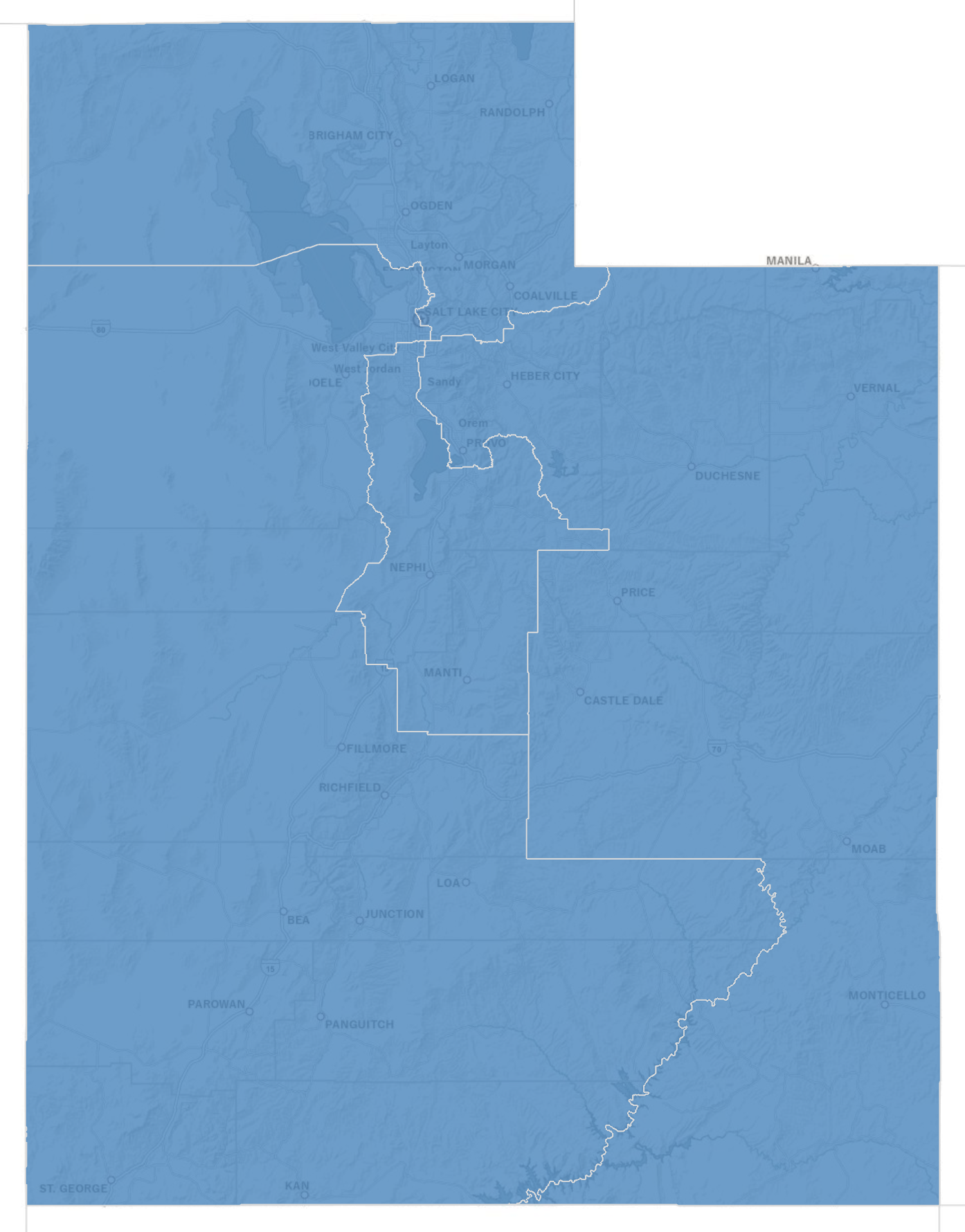 | 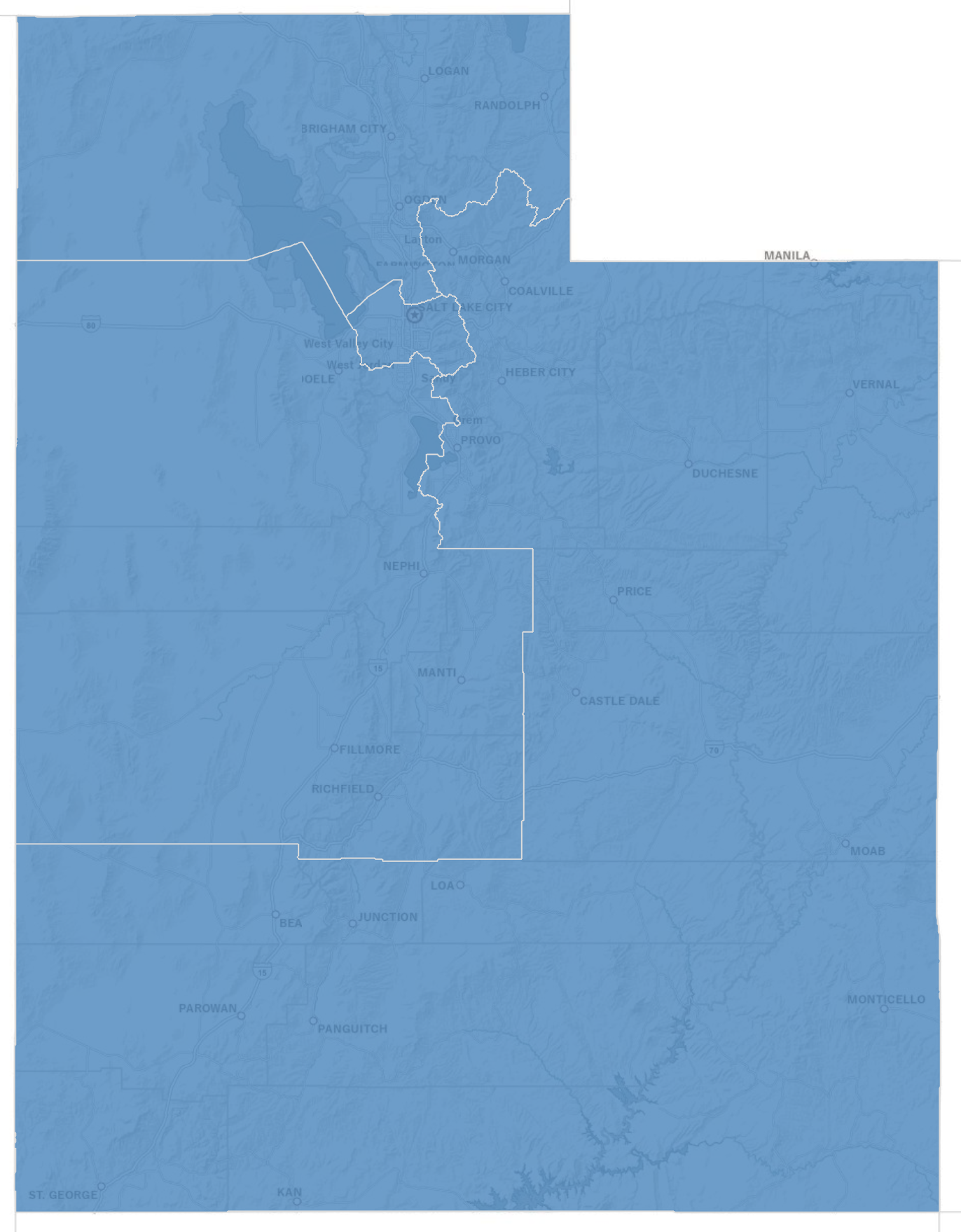 |
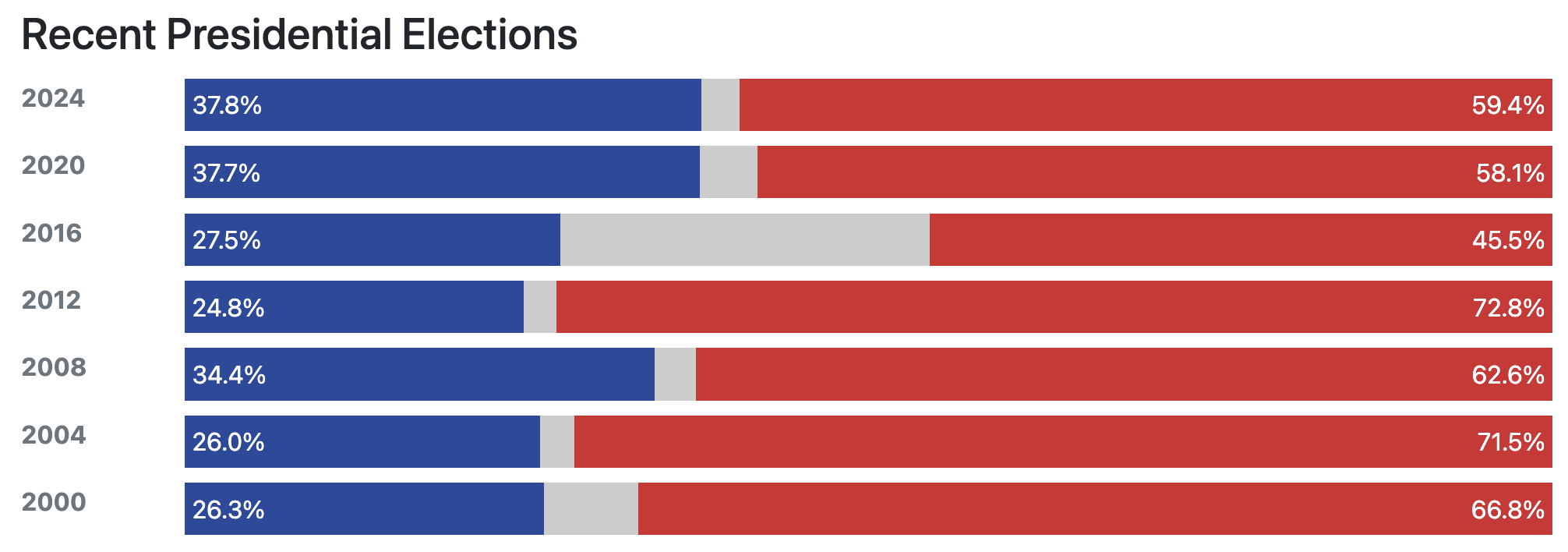
In the old map, poor old Salt Lake City has been sliced into four separate districts. If you have to maintain power by taking away other people’s power, you should reexamine your strategy. Rather, your principles and the quality of life it produces should bring people over to your side. Based on election results, there is clearly enough support for one of four seats to represent Salt Lake County. It’s not as though this change is giving a minority proportionally more power than they ought to have as a percentage of population. Just look at Utah Presidential Election results from 2000 through 2024:
I recommend voting AGAINST.
Harden The Grid Resolution
The proposed change can be found here.
Sponsor: Bob McEntee
Summary
- This is proposed as a national security issue
- It calls for the legislature to take action to harden the power grid against Electromagnetic Pulse (EMP) weapons and potential solar storms
- The resolution’s sponsor is concerned about Iran taking out our electronics with high-altitude nuclear bombs
- The resolution states that a 0.5% user fee on utility bills is considered acceptable for the purpose of hardening the grid
- A user fee is preferred over a rate increase to guarantee the money is used for the allotted purpose.
Personal Recommendation
It’s never a bad thing to be prepared. Rare but not impossible solar storms certainly do have the potential to cause catastrophic problems to our current modern electronics in a way that would not be easily fixable. On this resolution I am IMPARTIAL. (I would be in favor, except I cannot yet speak for my precinct on their willingness to pay more in fees for this right now.)
Resolution to Make Participation in a Primary with Signature Gathering Candidates a Party Choice
The proposed change can be found here.
Sponsor: Lowell Nelson
Summary
- There are many ways to skin a cat: this is another way around SB 54, which mandates two paths to the ballot (allows for signature gathering to get you on the ballot rather than the only path being winning the Party nomination at Convention).
- There are two kinds of parties in Utah Code: Registered Political Parties (RPP) and Qualified Political Parties (QPP).
- The requirements for registered parties in Utah Code is currently that you must hold a primary, or none of your candidates will appear on the general ballot.
- This resolution suggests we change this state law for an RPP to allow an RPP to not participate in a primary but still be on the ballot.
- The party could then choose to be a registered party, decide nominees at convention, and not participate in a primary. Then our convention pick goes directly to the general election ballot.
- A challenge to lawmakers: “Let’s see if our candidates who claim to love the caucus system so much but secretly like signature gathering have the guts to implement this change.”
Personal Recommendation
I understand how a caucus system lowers the effect of money in a campaign and gives more candidates a more equal footing in winning the nomination. However, I also understand the arguments for signature gathering when a system fails to represent the actual residents (whether by their own fault and lack of participation or by disenfranchisement). I think this is a very roundabout way of skirting a State law, and if the party has a supermajority in the State, the Legislature should simply change the law rather than the Party requiring this method of routing the current law. In either case, we’re asking the legislature to change the law–why not change the one that caused the problem in the first place? You’ll face exactly the same roadblocks and it’ll be exactly the same amount of effort. I recommend voting AGAINST.